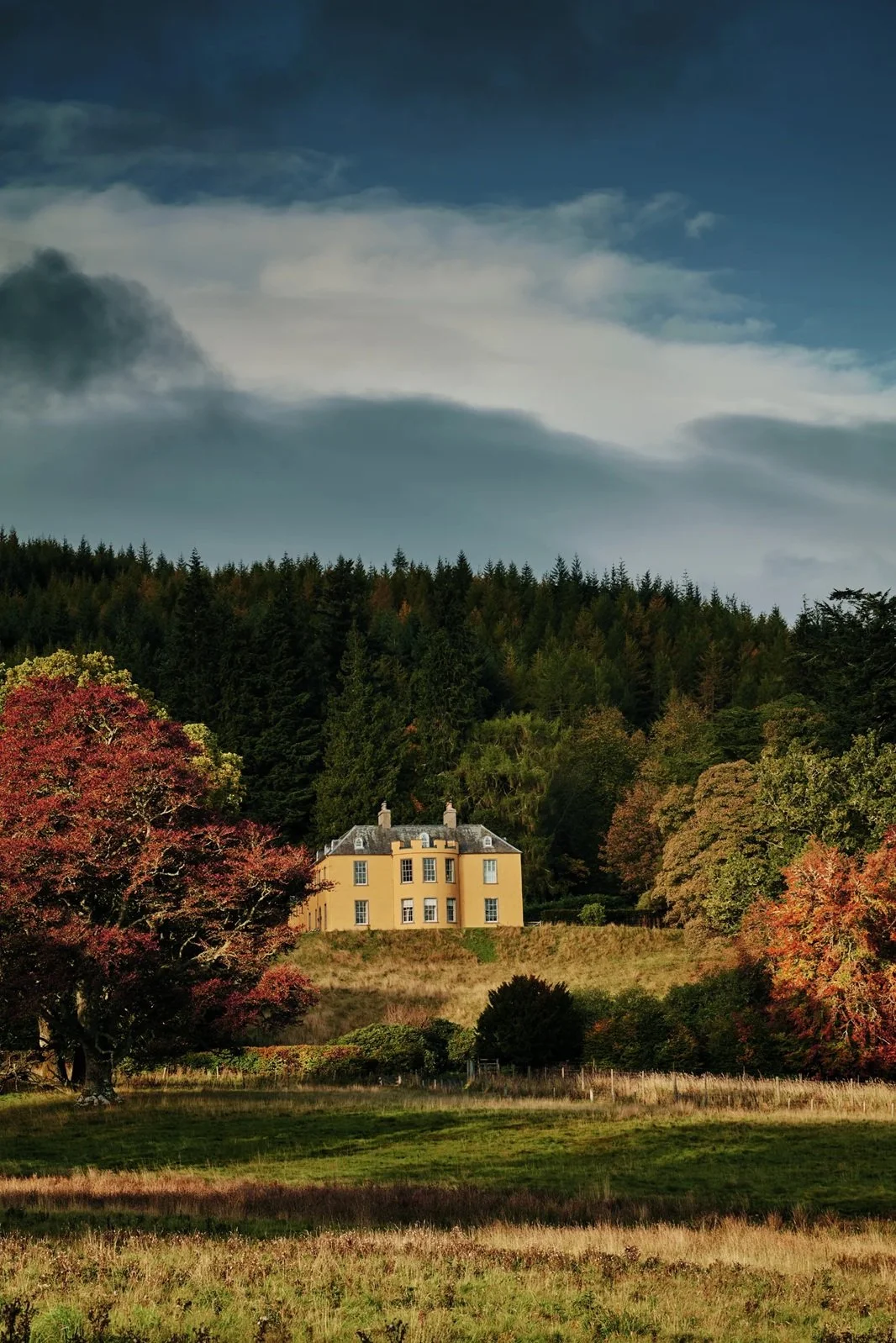
A romantic Georgian house and estate in the Scottish Highlands carefully revived by its new owner.
Inheriting a Georgian house and estate in the Scottish Highlands sounds like a dream come true. But with the romantic setting comes responsibility, as Korla co-founder Jane Bonsor soon realised
By Nonie NiesewandIn Gaelic, Tulliemet – derived from Tulloch Mod – means the good hill. When textile designer Jane Bonsor inherited Tulliemet on the Atholl Estates in the Scottish Highlands, in 2018, she had more than a hill to climb to address the challenges of the land, which encompassed a working farm, ancient woodlands, a large flock of sheep, a herd of continental cattle, and a Georgian house in need of restoration. As the co-founder of Korla textile and design house, and creative director of Borderline – both now owned by Rosebank – Jane has the benefit of an interiors background and instincts that suggested she should start with the house to establish a base. But she quickly realised that the land was deteriorating and that focusing only on the house would be a costly mistake.
Decades of pesticides and overstocking had left the soil depleted,’ she explains. Plans to regenerate the land were put in place with contract farmers Tom and May MacIntyre. The Blackface sheep were taken off the hills so the ground could recover, and insect and bird numbers increased quickly. ‘Posh Swiss’ Simmental cattle were replaced by Aberdeen Angus that could stay outside all winter, which meant that Jane would not have to spend funds on repairing the huge animal sheds.
Only then did Jane return to restoring the three-storey Georgian house, built in the early 19th century by William Dick (an East India Company physician) on his return to Scotland. Framed by the Perthshire hills and ancient woodlands where Himalayan pines and rare rhododendrons thrive, the bow-fronted house with its crenellated parapet is now painted in a distinctive burnt sienna, inspired by an historical recipe made from lime mixed with iron scrapings.
Working with Robbie McDowall and Henry Dempsey of Harry Taylor & Company in Perth, the restoration project began to bring the house into the 21st century. As with the land, sustainability was Jane’s priority: Tulliemet now has a biomass heating system, and Zypho systems were installed in order to recycle the heat generated by hot water from showers.
‘My father is an architect and I grew up preferring symmetry, good proportions and strong architectural bones, not cover-ups,’ explains Jane, who studied history and the history of art at the University of Edinburgh. Strong colours inspired by the landscape and seasons determined the house’s furnishings. ‘They match the changing hues of the woodland – from the fresh larch greens of spring to the autumnal shades of the copper beech, bronze bracken and the colours of falling leaves.’ Some furniture was retrieved from the attics at Blair Castle – home to the Atholl family for more than seven centuries – where Jane’s uncle, the Duke of Atholl, lived.
For much of the year, Tulliemet is rented out for short-term lets. One famous visitor was Beatrix Potter. Time spent in the gardens at Eastwood House on the estate, which her parents rented, inspired in 1893 for The Tale of Peter Rabbit. Today the walled garden at Tulliemet would need more than one irascible Mr McGregor to maintain the fertility of the soil and control not only rabbits but also nature more broadly.
Jane is a supporter of the regenerative agriculture festival Groundswell. Prince William addressed over 10,000 visitors at this year’s event, stressing the importance of soil regeneration in food production. For Jane, inheriting a Scottish estate has been a call to stewardship. Tulliemet deserves a long-term vision, based on respect for the landscape and its history: a reminder that a thriving estate has to be built from the ground up.